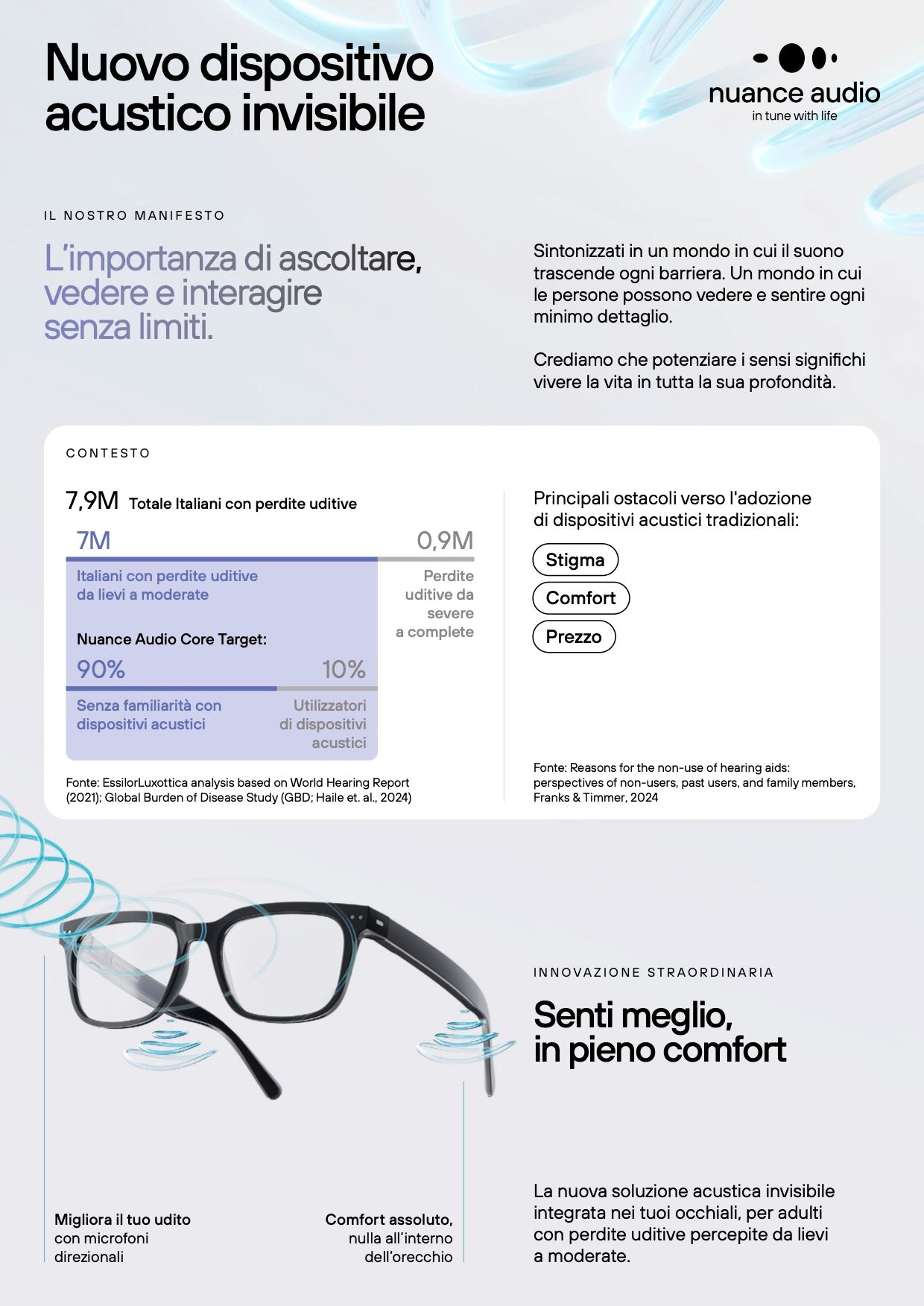
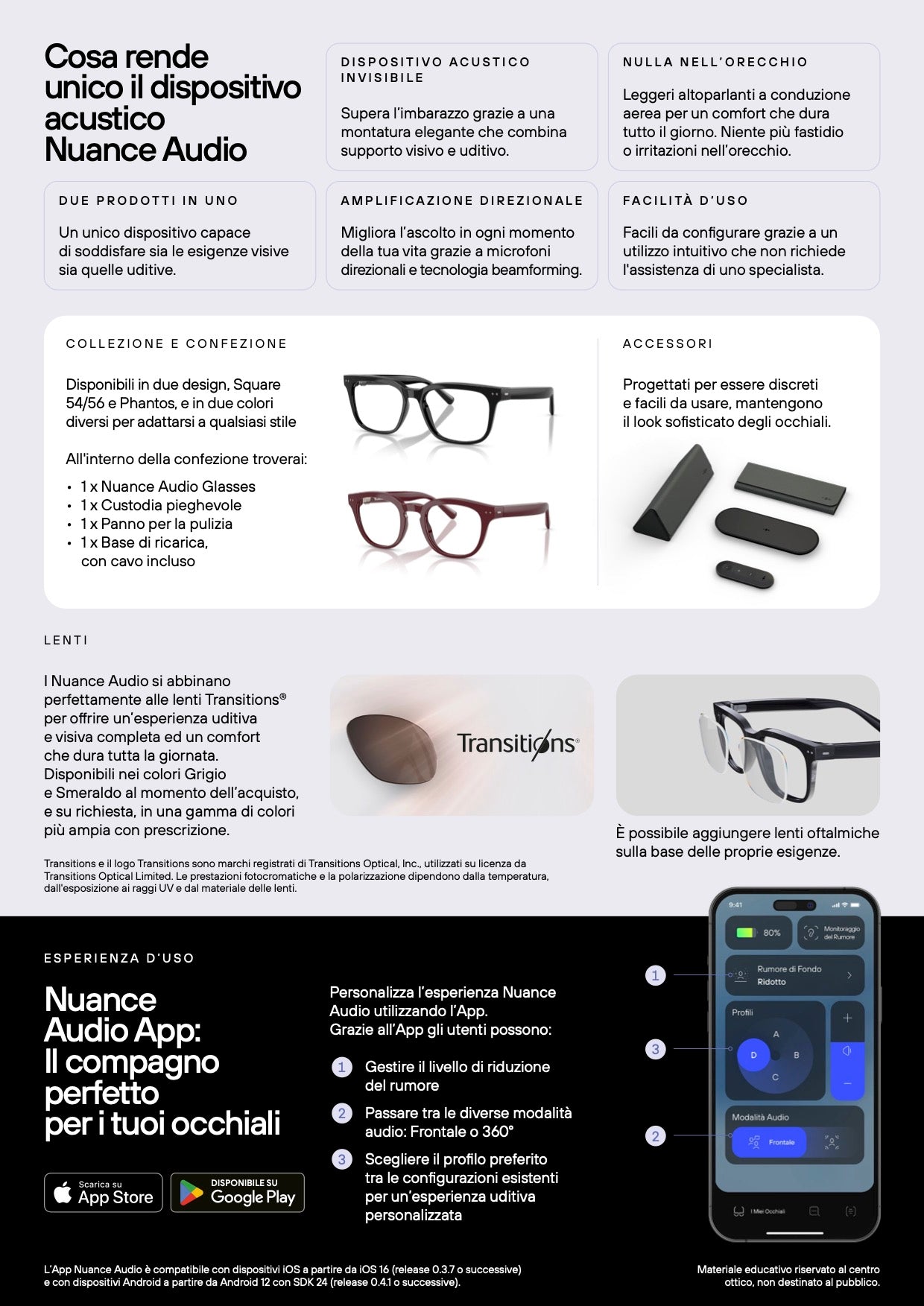
The first hearing glasses, exclusively in Macerata
Eye test
Assessing, measuring and correcting the visual system together make up the OPTOMETRIC REFRACTIVE EXAMINATION, commonly known as an “eye test”.
The optometric refractive examination uses objective methods, which do not require the direct cooperation of the person being examined, and subjective methods, which require their active participation.
Optometry is a professional, non-medical activity whose aim is to quantify and correct refractive errors and improve personal visual function using non-medical techniques.
It is the foundation of modern contact lens practice and of low-vision care.
The goal of the optometric examination is high-quality optical correction that gives good, comfortable, well-tolerated vision without eye strain.
Our staff includes optometrists, contact lens specialists and orthoptists: a unique, complete service for your vision.
Contact lenses
Contact lenses are an excellent solution, both for convenience and for correcting any kind of vision defect.
There is no single ideal contact lens for everyone, because no two eyes are alike: each eye differs not only in the degree of its refractive error, but also in the curvature of the cornea, the composition of the tear film, and the resistance and sensitivity of the tissues of the front of the eye.
All of this must be carefully analysed in order to choose the most suitable contact lens – not only in power and shape but also in material – so that the wearer can enjoy maximum comfort.
To wear contact lenses properly and happily, you need:
- a thorough history to identify the wearer's physiological and daily-life needs;
- selection of the most suitable type of lens;
- a lens trial and a check after a few hours of wear;
- instruction on inserting, removing and caring for the lenses;
- check-ups at least twice a year.
Today's technology offers a very wide range of contact lenses that differ in design, material and wearing schedule.
Only serious, well-trained professionals can guide the wearer to the ideal solution.
Low vision
A person with low vision is someone who, even with glasses or contact lenses, has difficulty carrying out normal daily activities.
Reading a book or the post, shopping in a supermarket, cooking, watching television or simply signing your name become hard, almost impossible tasks.
Living with a visual impairment can be difficult; however, optical devices, technology and careful rehabilitation can help people with poor visual acuity.
Unlike a blind person, someone with low vision has residual sight that can and should be used for their independence. The person's independence must be the ultimate goal of all technical, medical and rehabilitation expertise.
Most people develop low vision because of eye diseases and health conditions such as macular degeneration, cataract, glaucoma and diabetes. Others lose sight after eye injuries or because of congenital defects.
Although many people keep good vision throughout their lives, those over 65 are at greater risk of developing serious vision problems.
When vision drops to a level that limits independence – conventionally 2 or 3/10, or a restricted visual field – you should seek the care of a low-vision specialist. Your trusted eye doctor (ophthalmologist) will distinguish between the natural changes of the ageing eye and those caused by eye disease.
What does 1/10 vision mean? Simply that the person sees a letter at 1 metre that someone with normal sight sees at 10 metres.
Low vision is a hugely important issue for the individual, and a very relevant one for society as a whole.
The number of people with low vision keeps rising as life expectancy increases. Today, thanks to early diagnosis, medication and surgery, the negative effects of eye diseases can be limited.
Glazing workshop
GreenVision opticians assemble made-to-measure glasses in their own in-house workshops.
Thanks to the remote edging service and the GreenVision Online software, lenses arrive pre-shaped directly from the supplier, ready to be fitted into the frames.
The advantages:
1. precise fitting;
2. faster delivery;
3. thinnest possible plus-power lenses;
4. optimal edge polishing and a clean Nylor groove.
To always guarantee real visual comfort, GreenVision Optical Centres carry out at least 35 checks on every made-to-measure pair of prescription glasses before handing it to the customer, following ISO 13485, the quality standard for medical devices.